

As a supplier of the PET155 Upper Horizontal Forklift, I am often asked about the maximum travel distance on a single charge for this remarkable piece of equipment. In this blog post, I will delve into the factors that influence this distance, provide some real - world estimates, and offer insights to help you understand how to optimize the forklift's range.
Factors Affecting the Travel Distance on a Single Charge
The maximum travel distance of the PET155 Upper Horizontal Forklift on a single charge is not a fixed value. It is affected by several key factors:
Battery Capacity
The battery is the heart of an electric forklift, and its capacity plays a crucial role in determining the travel distance. The PET155 Upper Horizontal Forklift is equipped with high - quality batteries that are designed to provide sufficient power. Generally, a larger battery capacity means more energy is stored, which can potentially lead to a longer travel distance. For example, if the battery has a higher amp - hour (Ah) rating, it can supply power for a longer period, allowing the forklift to cover more ground.
Load Weight
The weight of the load being carried by the forklift has a significant impact on its energy consumption. When the forklift is carrying a heavy load, the motor has to work harder to move the vehicle, which consumes more battery power. In contrast, when the forklift is operating with a light load or no load at all, it requires less energy, and thus can travel a longer distance on a single charge. For instance, if the forklift is used to move small, lightweight packages, it will use less power compared to when it is transporting large, heavy pallets.
Operating Conditions
The environment in which the forklift operates also affects its travel distance. Factors such as the type of terrain, temperature, and humidity can all influence energy consumption. On rough or uneven terrain, the forklift's wheels have to work harder to move forward, which increases energy usage. Similarly, extreme temperatures can affect the battery's performance. Cold temperatures can reduce the battery's efficiency, while high temperatures can cause the battery to overheat and lose capacity. In addition, if the forklift is frequently starting and stopping, such as in a busy warehouse with a lot of traffic, it will consume more energy compared to continuous, smooth operation.
Forklift Motor Efficiency
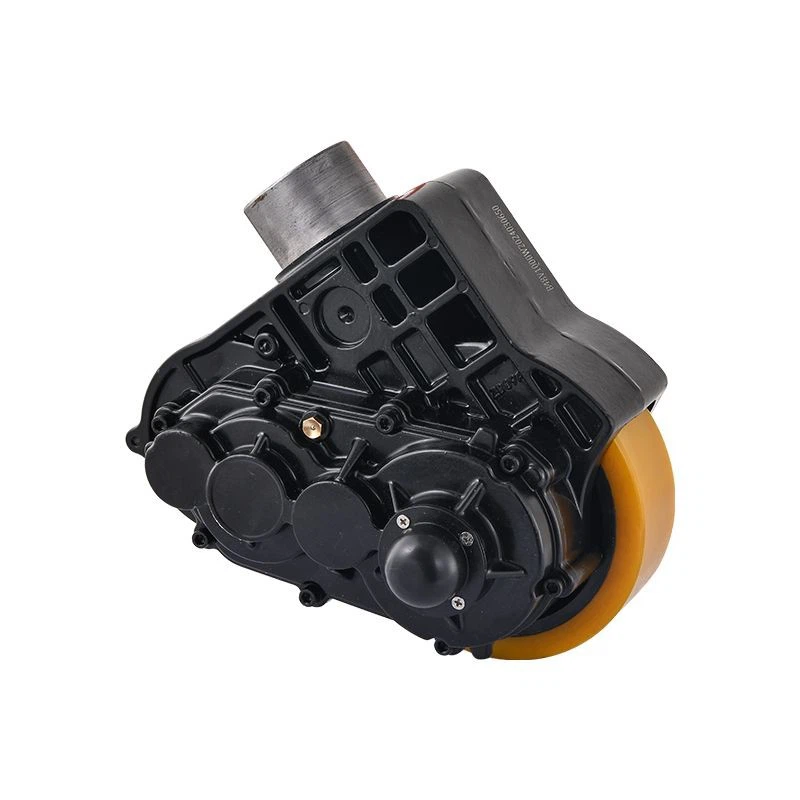
The efficiency of the forklift's motor is another important factor. A more efficient motor can convert electrical energy into mechanical energy more effectively, which means it uses less power to perform the same task. The PET155 Upper Horizontal Forklift is equipped with advanced motors, such as the No.2 Push Handling Forklift Motor and the ZD09 Push Handling Forklift Motor, which are designed to be highly efficient. These motors can optimize power usage, allowing the forklift to travel further on a single charge.
Real - World Estimates
Based on our experience and customer feedback, under normal operating conditions, the PET155 Upper Horizontal Forklift can travel approximately 20 - 30 kilometers on a single charge when operating with a moderate load. This estimate assumes that the forklift is operating on a flat, smooth surface, with a load weight of around 50% of its maximum capacity, and the battery is in good condition.
However, if the forklift is operating under ideal conditions, such as on a smooth, flat floor with a light load, it may be able to travel up to 40 kilometers on a single charge. On the other hand, if the operating conditions are less favorable, such as on rough terrain or with a heavy load, the travel distance may be reduced to as little as 10 - 15 kilometers.
Optimizing the Travel Distance
To maximize the travel distance of the PET155 Upper Horizontal Forklift on a single charge, the following tips can be followed:

Proper Battery Management
Regularly charging the battery to its full capacity and avoiding over - discharging can help maintain the battery's health and performance. It is also important to follow the manufacturer's recommendations for battery maintenance, such as checking the electrolyte levels (if applicable) and keeping the battery clean.
Load Management
Try to balance the load as evenly as possible and avoid overloading the forklift. When possible, break large loads into smaller, more manageable ones to reduce the energy required to move them.
Route Planning
Plan the forklift's routes in advance to minimize unnecessary travel. Avoid taking long detours or making unnecessary turns, as this can increase energy consumption. In addition, try to group similar tasks together to reduce the number of times the forklift has to start and stop.
Motor Maintenance
Keep the forklift's motor in good condition by following the recommended maintenance schedule. Regularly check the motor for any signs of wear or damage, and replace any worn - out parts promptly. This can help ensure that the motor is operating at its maximum efficiency, which in turn can improve the forklift's travel distance.
Conclusion
The maximum travel distance of the PET155 Upper Horizontal Forklift on a single charge is influenced by multiple factors, including battery capacity, load weight, operating conditions, and motor efficiency. By understanding these factors and taking steps to optimize the forklift's operation, you can maximize its travel distance and get the most out of your investment.
If you are interested in purchasing the PET155 Upper Horizontal Forklift or have any questions about its performance, I encourage you to contact us for further discussion. Our team of experts is ready to assist you in finding the best solution for your material handling needs.
References
- Forklift Operator's Manual - PET155 Upper Horizontal Forklift
- Industry reports on electric forklift energy consumption
- Battery manufacturer's specifications and guidelines