

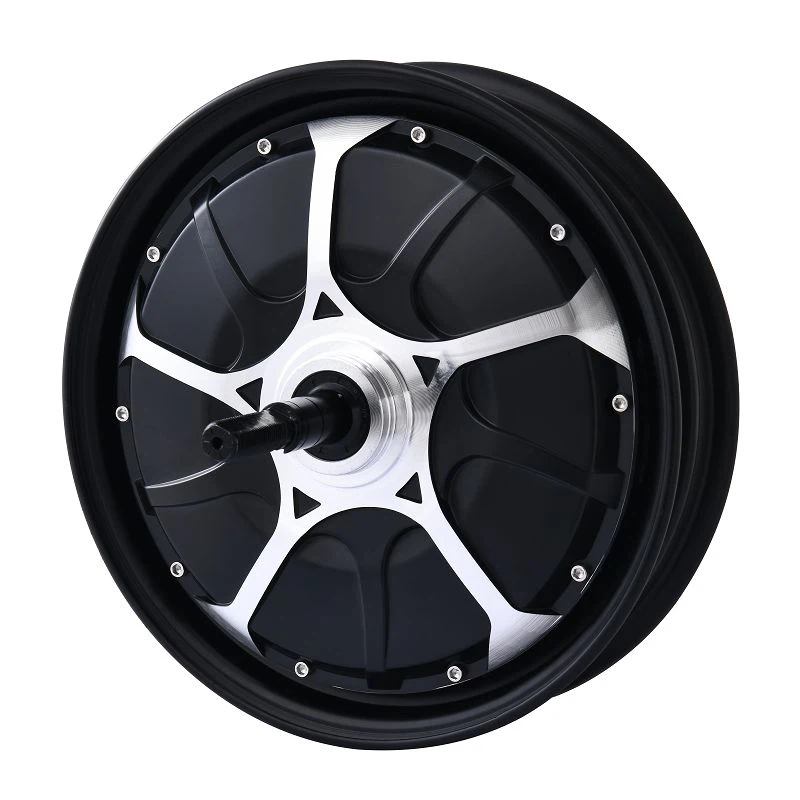
Hey there! As a supplier of the ZDL - 04 Hub Motor, I've been getting a lot of questions lately about how to improve its power density. So, I thought I'd put together this blog post to share some insights and tips.
First off, let's talk about what power density is. Power density is basically the amount of power a motor can produce per unit volume or mass. In simpler terms, it's how much "oomph" you can get out of a motor without making it too big or heavy. For the ZDL - 04 Hub Motor, improving power density is crucial because it can lead to better performance, longer battery life, and a more efficient electric vehicle.
1. Optimize the Magnetic Circuit
One of the most effective ways to improve the power density of the ZDL - 04 Hub Motor is to optimize its magnetic circuit. The magnetic circuit is like the heart of the motor, as it's responsible for generating the magnetic field that makes the motor spin.
We can start by using high - performance magnetic materials. For example, neodymium magnets are known for their high magnetic strength. By replacing the existing magnets in the ZDL - 04 with neodymium magnets, we can increase the magnetic flux density in the motor. This, in turn, allows the motor to generate more torque and power without increasing its size.
Another aspect of optimizing the magnetic circuit is to improve the magnetic circuit design. We can reduce magnetic leakage by carefully shaping the magnetic poles and using proper magnetic shielding. This ensures that more of the magnetic field is used to generate useful torque, rather than being wasted. You can check out our ZDL - 01 Hub Motor for some design inspiration, as it has a well - optimized magnetic circuit.
2. Enhance the Cooling System
Heat is the enemy of power density. When a motor gets too hot, its performance starts to degrade, and it can even get damaged. So, enhancing the cooling system of the ZDL - 04 Hub Motor is essential.
One option is to use liquid cooling. We can design a cooling jacket around the motor that circulates a coolant, such as water or a special coolant fluid. This helps to dissipate the heat generated during operation more effectively. Liquid cooling can keep the motor at a lower temperature, allowing it to operate at higher power levels without overheating.
Another approach is to improve the ventilation of the motor. We can add more vents or fans to the motor housing to increase the airflow. This helps to carry away the heat and keep the motor cool. For instance, our ZDL - 03 Hub Motor uses a combination of liquid and air cooling, which has significantly improved its power density.
3. Upgrade the Winding Design
The winding design of the motor also plays a big role in its power density. By upgrading the winding design, we can reduce the resistance and increase the efficiency of the motor.
We can use thinner and higher - conductivity wires for the windings. Copper is a popular choice because of its high electrical conductivity. By using high - purity copper wires, we can reduce the resistance in the windings, which means less power is wasted as heat.
Another technique is to use a more advanced winding pattern. For example, a distributed winding pattern can provide a more uniform magnetic field compared to a concentrated winding pattern. This leads to better torque production and higher power density.
4. Improve the Control System
The control system of the ZDL - 04 Hub Motor is like the brain that tells the motor how to operate. By improving the control system, we can optimize the motor's performance and increase its power density.
We can use more advanced control algorithms. For example, field - oriented control (FOC) is a popular algorithm that allows for precise control of the motor's torque and speed. By using FOC, we can ensure that the motor operates at its maximum efficiency under different load conditions.

In addition, we can add sensors to the motor to monitor its temperature, current, and other parameters. The control system can then adjust the motor's operation based on these sensor readings. For example, if the motor is getting too hot, the control system can reduce the power output to prevent overheating.
5. Reduce Mechanical Losses
Mechanical losses in the motor can also affect its power density. These losses occur due to friction in the bearings, gears (if any), and other moving parts.
We can use high - quality bearings with low friction coefficients. This reduces the amount of power that is wasted in overcoming the friction in the bearings. Additionally, we can lubricate the moving parts regularly to further reduce friction.
If the ZDL - 04 Hub Motor has gears, we can optimize the gear design. Using more efficient gear profiles and reducing the number of gear meshes can help to reduce mechanical losses.
Conclusion
Improving the power density of the ZDL - 04 Hub Motor is a multi - faceted process that involves optimizing the magnetic circuit, enhancing the cooling system, upgrading the winding design, improving the control system, and reducing mechanical losses. By implementing these strategies, we can make the ZDL - 04 a more powerful and efficient motor.
If you're interested in learning more about our ZDL - 04 Hub Motor or are looking to place an order, feel free to reach out. We're always happy to discuss your specific needs and how our motors can meet them.
References
- "Electric Motor Handbook" by Paul C. Krause
- "Power Electronics and Motor Drives: Advances and Trends" edited by Bimal K. Bose