

Hey there! As a supplier of the ZDL - 04 Hub Motor, I often get asked about the type of speed sensor it uses. So, I thought I'd dive into this topic and share all the details with you.
First off, let's understand why speed sensors are so crucial in hub motors. In a hub motor like the ZDL - 04, the speed sensor plays a vital role in regulating the motor's performance. It provides real - time data about how fast the motor is spinning. This information is then used by the motor controller to adjust the power output, ensuring smooth and efficient operation.
The ZDL - 04 Hub Motor uses a Hall - effect speed sensor. Now, you might be wondering, what the heck is a Hall - effect sensor? Well, it's a pretty nifty little device. The Hall - effect is a physical phenomenon discovered way back in 1879 by Edwin Hall. When a magnetic field is applied perpendicular to an electric current flowing through a conductor, a voltage difference is created across the conductor. This voltage difference, known as the Hall voltage, is proportional to the strength of the magnetic field.
In the context of our ZDL - 04 Hub Motor, the Hall - effect speed sensor consists of a magnet attached to the rotating part of the motor (the rotor) and a Hall - effect sensor chip fixed to the stationary part (the stator). As the rotor spins, the magnet passes by the Hall - effect sensor chip. Each time the magnet passes, the sensor detects the change in the magnetic field and generates a pulse. By counting these pulses over a specific period, the motor controller can calculate the speed of the motor.
One of the main advantages of using a Hall - effect speed sensor in the ZDL - 04 is its high accuracy. These sensors can provide very precise speed measurements, which is essential for maintaining optimal motor performance. Whether you're using the ZDL - 04 in an electric bike, a scooter, or some other electric vehicle, accurate speed control is key to a smooth and safe ride.
Another benefit is the durability of Hall - effect sensors. They have no moving parts other than the magnet on the rotor, which means there's less wear and tear compared to some other types of speed sensors. This makes the ZDL - 04 more reliable in the long run, reducing the need for frequent maintenance and replacements.
Now, let's compare the ZDL - 04 with some of our other hub motors. We also offer the ZDL - 01 Hub Motor, the ZDL - 02 Hub Motor, and the ZDL - 03 Hub Motor. While all of these motors are designed for high - performance applications, the ZDL - 04 stands out in terms of its speed - sensing technology.
The ZDL - 01, for example, uses a different type of speed sensor, an optical encoder. Optical encoders work by using a light source and a photodetector to detect the rotation of a disk with evenly spaced slots or markings. While optical encoders can also provide accurate speed measurements, they are more susceptible to dust, dirt, and moisture. This can affect their performance over time, especially in harsh environments.
The ZDL - 02 and ZDL - 03 use magnetic encoders, which are similar in principle to Hall - effect sensors but have a different design. Magnetic encoders typically use a magnetic disk with a pattern of north and south poles, and a magnetic sensor to detect the changes in the magnetic field as the disk rotates. However, the Hall - effect sensor in the ZDL - 04 offers better resolution and faster response times compared to the magnetic encoders in the ZDL - 02 and ZDL - 03.
In addition to its speed - sensing capabilities, the ZDL - 04 Hub Motor has several other features that make it a great choice for electric vehicle applications. It has a high power density, which means it can deliver a lot of power in a relatively small package. This is important for electric bikes and scooters, where space is often limited.

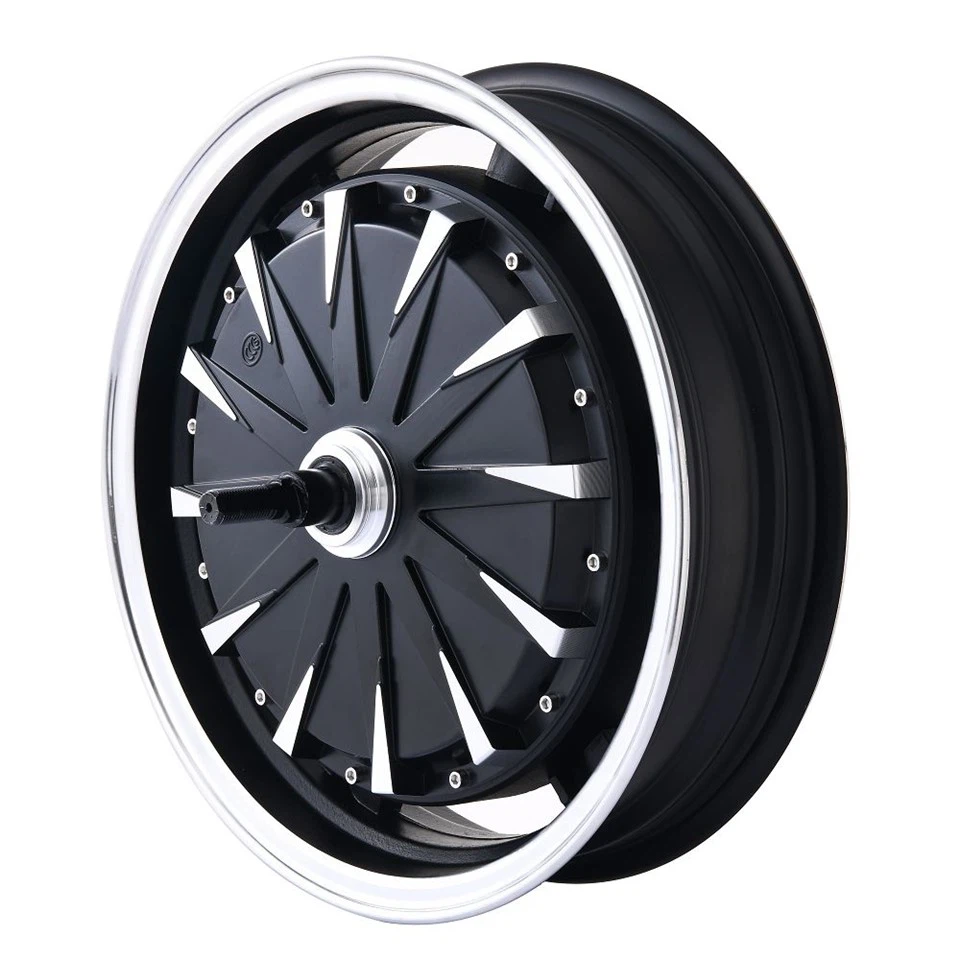
The motor also has a high efficiency rating, which translates to longer battery life. When the motor operates more efficiently, it uses less energy from the battery, allowing you to go further on a single charge. This is a major advantage for users who rely on their electric vehicles for daily commuting or other regular use.
If you're in the market for a high - performance hub motor with accurate speed control, the ZDL - 04 is definitely worth considering. Whether you're a manufacturer looking to integrate the motor into your electric vehicle designs or an individual looking to upgrade your existing electric bike or scooter, we can provide you with the ZDL - 04 Hub Motor and all the necessary support.
We understand that every customer has different needs, so we're happy to work with you to customize the motor to fit your specific requirements. Whether it's adjusting the power output, changing the mounting options, or modifying the speed - sensing settings, our team of experts can help you get the most out of the ZDL - 04.
If you're interested in learning more about the ZDL - 04 Hub Motor or would like to discuss a potential purchase, don't hesitate to reach out. We're here to answer all your questions and guide you through the purchasing process.
References:
- Hall, E. H. (1879). On a new action of the magnet on electric currents. American Journal of Mathematics, 2(3), 287 - 292.
- Relevant technical documentation of ZDL - 04, ZDL - 01, ZDL - 02, and ZDL - 03 Hub Motors.